
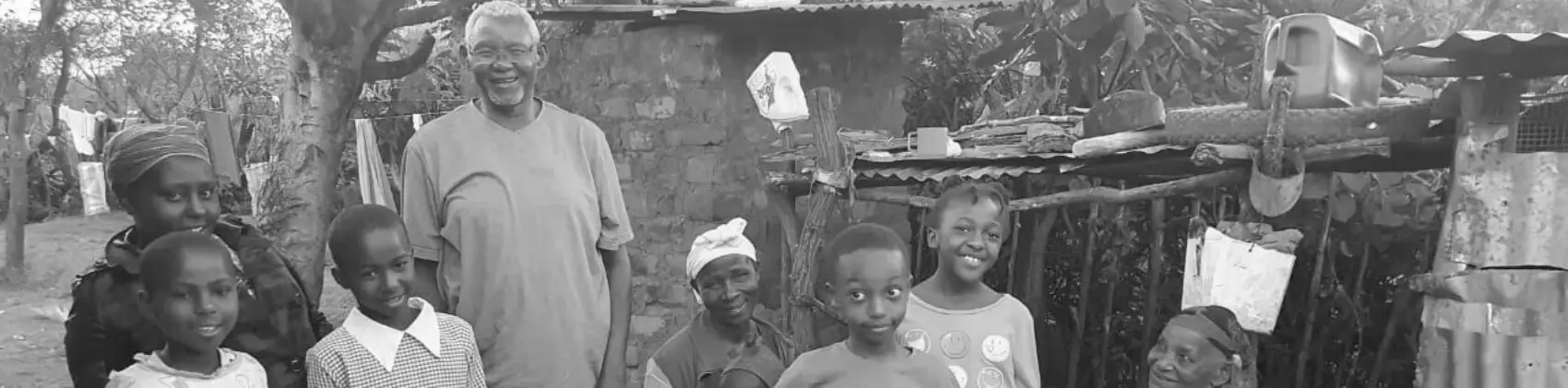



Malili, a rural village in Makueni County, Kenya, is home to over 7,000 residents who largely depend on subsistence farming for survival. However, for years, these smallholder farmers have struggled against outdated methods, unpredictable weather, poor infrastructure, and a lack of training. Through its second pillar, Enhance Farming Practices, the Muindu Seeds and Deeds Foundation is actively addressing these challenges to improve food security and promote sustainable livelihoods.
Understanding the Problem
The farming community in Malili has faced back-to-back crises—from a three-year drought that ended in 2022, to the destructive El Niño floods in 2023. Farmers primarily grow maize, beans, pigeon peas, and green grams, depending almost entirely on rainfall. In addition, livestock herds were decimated by disease, drought, and pest infestations.
These climate shocks, compounded by traditional, inefficient farming practices, have led to low yields, food insecurity, and high poverty levels. Even during good rains, many households are unable to reap adequate harvests. This calls for urgent adoption of climate-smart farming and access to modern knowledge and tools.
The Community Centre Solution
To combat these challenges, the Foundation is constructing the Malili Farm Community Centre—a central hub designed to train farmers, demonstrate innovations, and serve as a resource and engagement space. The goals include:
- Boosting agricultural productivity
- Reducing crop loss
- Enhancing nutrition and food security
- Building economic independence
Target Groups:
- Smallholder farmers
- Youth
- Local school children
Target Area:
- Ngiini, Kikongooni, Malili, Kilombo (0–5 km radius)
- Kalanzoni, Uini, Kwakea, Kasunguni, Nguluni, Mavivye, Kiima Kiu (5–10 km radius)
What Has Been Done So Far
In August 2023, the Foundation established a demonstration farm equipped with a 150,000-litre rainwater harvesting pool. The results are already inspiring: maize yield improved from 3 to 14 bags per acre, and beans from 1 to 5 bags. The farm now grows a wide variety of vegetables and fruits—spinach, sukuma, managu, bell peppers, bananas, mangoes, papayas, and more.
Farmers and staff are also receiving training in agro-ecological zoning, organic farming, and water conservation. This success forms the blueprint for the larger vision: the Community Centre.
Centre Components & Activities
The Centre will offer:
- Workshops and Training: On sustainable farming, entrepreneurship, and climate adaptation.
- Demonstration Space: For irrigation systems, seed propagation, kitchen gardens, and agroforestry.
- Resource Centre: Market insights, soil health plans, and business support.
- Community Engagement: Regular events like farmer expos, wellness screenings, and forums.
- Technology Access: Water-saving irrigation systems, hydroponics, farm software, and soil analysis tools.
Phased Implementation
- Stage 1 – Construct the Training Hall
- Stage 2 – Add offices, kitchenette, and bathrooms
- Stage 3 – Equip with tools, whiteboards, projectors, and computers
- Stage 4 – Begin trainings and workshops
Design: A flexible, modern hall for up to 60 participants, including admin office and sanitation facilities.
Project Budget
Construction Costs
| Item | Cost (KES) | Cost (USD) |
|---|---|---|
| Preliminaries | 150,000 | — |
| Superstructure | 988,410 | — |
| Substructure | 224,000 | — |
| Walling | 469,200 | — |
| Windows | 200,360 | — |
| Doors | 288,160 | — |
| Finishing | 1,332,040 | — |
| Roofing | 628,550 | — |
| Electrical & Mechanical | 300,000 | — |
| Total | 4,580,750 | $36,646 |
Breakdown
- Main Hall: KES 2,055,000 / USD 16,440
- Admin Office, Kitchenette: KES 1,531,828 / USD 12,255
- Bathrooms: KES 993,922 / USD 7,951
Equipment Budget
| Item | Cost (KES) | Cost (USD) |
|---|---|---|
| Chairs, Tables, Whiteboards | 50,000 | — |
| Projector & Screen | 50,000 | — |
| Solar Kit | 150,000 | — |
| Computer | 40,000 | — |
| Total | 290,000 | $2,320 |
Expected Outcomes
- Reliable food availability for households
- Economic uplift through profitable farming
- Climate resilience and sustainable practices
- Local innovation and knowledge-sharing
- Youth and women empowerment through inclusion
Sustainability and Evaluation
The project will sustain itself through:
- Sale of seedlings and produce
- Paid training and resource services
- Hosting events and agri-exhibitions
- Regular monitoring, data tracking, and impact analysis
Conclusion
Through this Centre, Muindu Seeds and Deeds Foundation is doing more than improving agriculture—it is building resilience, dignity, and prosperity in Malili. Strategic partnerships, community ownership, and measurable impact are at the heart of this pillar’s success. The seeds have been planted. Now, it’s time to grow.